
Explore the Science Behind Regenerative Matrix Therapy™
We believe in transparency, evidence, and continuous learning.
This is where we share the science that shapes our protocol and the insights that guide our work.
Regenerative Matrix Therapy™ is grounded in biology and guided by research. This page is updated regularly with original educational content that relates to our treatment philosophy, as well as summaries of published clinical studies and peer-reviewed trials on treatments that share foundational similarities with our approach.
While many of the featured studies reflect the growing body of evidence supporting biologic and regenerative therapies, Regenerative Matrix Therapy™ is built upon and enhanced from this foundation — representing a next-generation application designed with precision, personalization, and performance in mind.
Each article is written to make the data understandable and relevant — for both physicians and curious patients — while maintaining scientific accuracy and integrity.

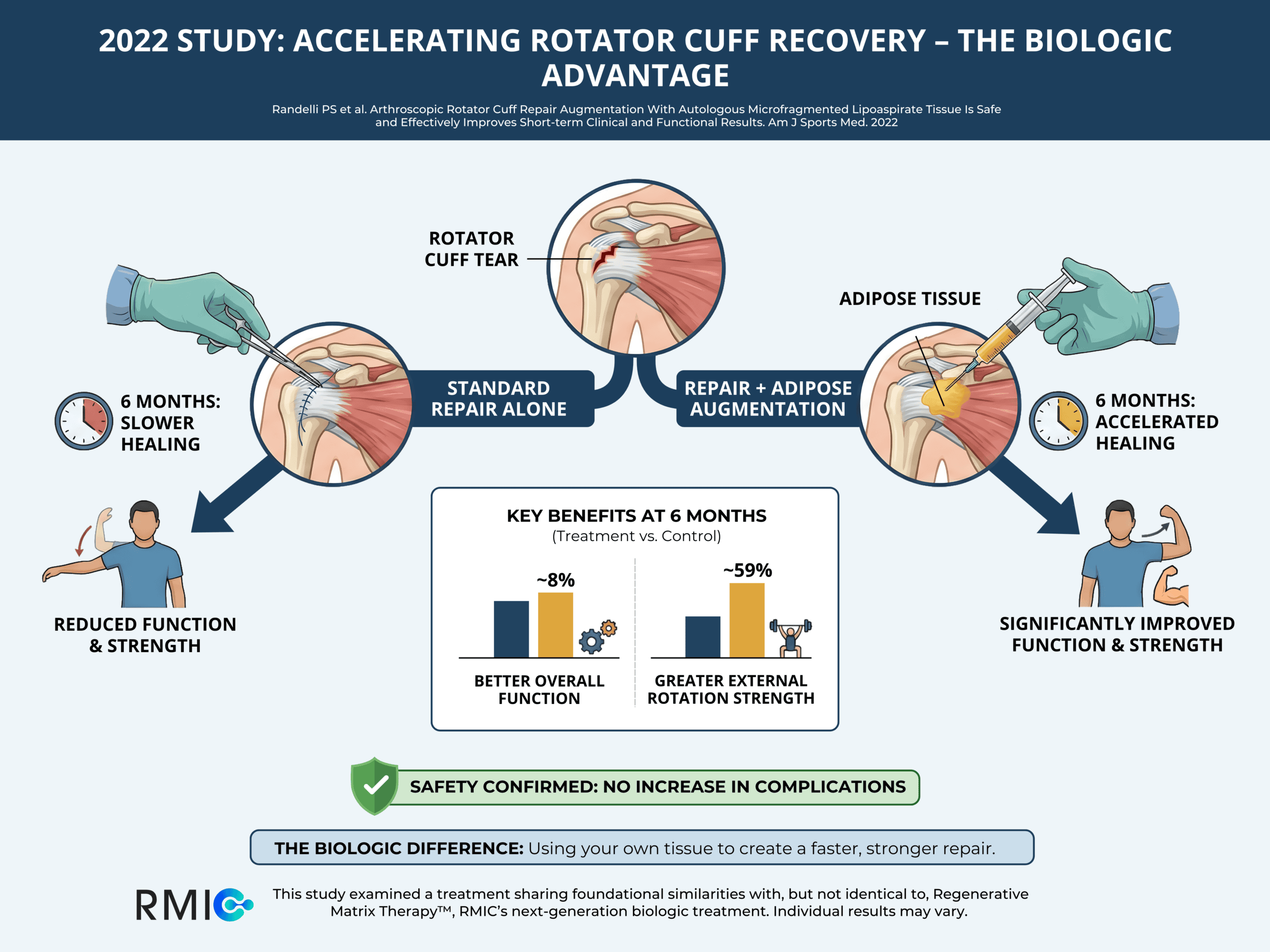
2022 Study: Adipose Augmentation Accelerates Rotator Cuff Recovery After Surgery
A 2022 study (randomized controlled trial) shows adipose tissue added during rotator cuff repair improves early shoulder function, strength, and recovery speed.
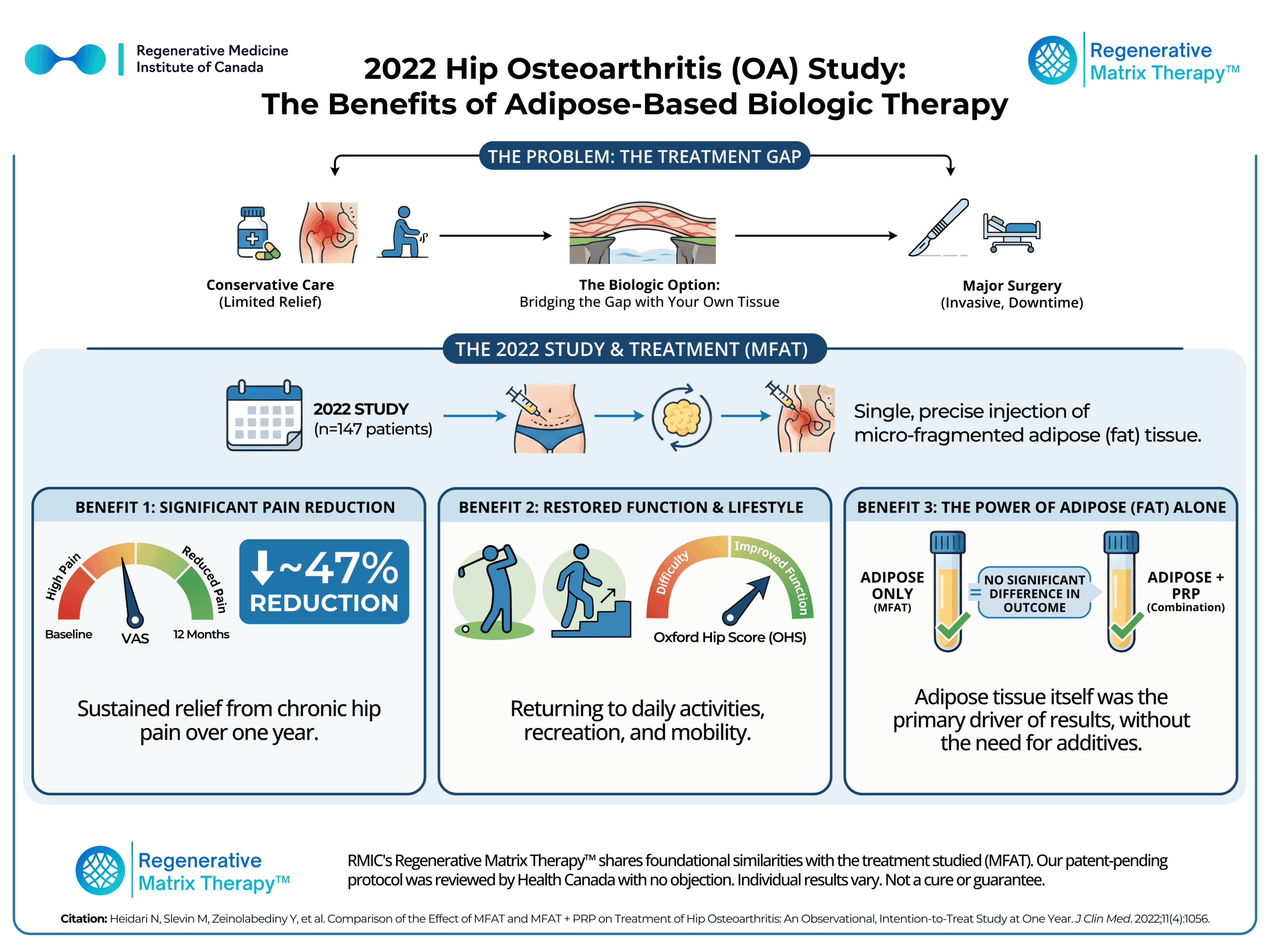
2022 Study: Adipose Therapy Significantly Improves Pain and Functional in Hip Osteoarthritis (OA)
Large 2022 hip OA study: adipose therapy (MFAT) ± PRP improved pain and function at 1 year, with no serious events reported.
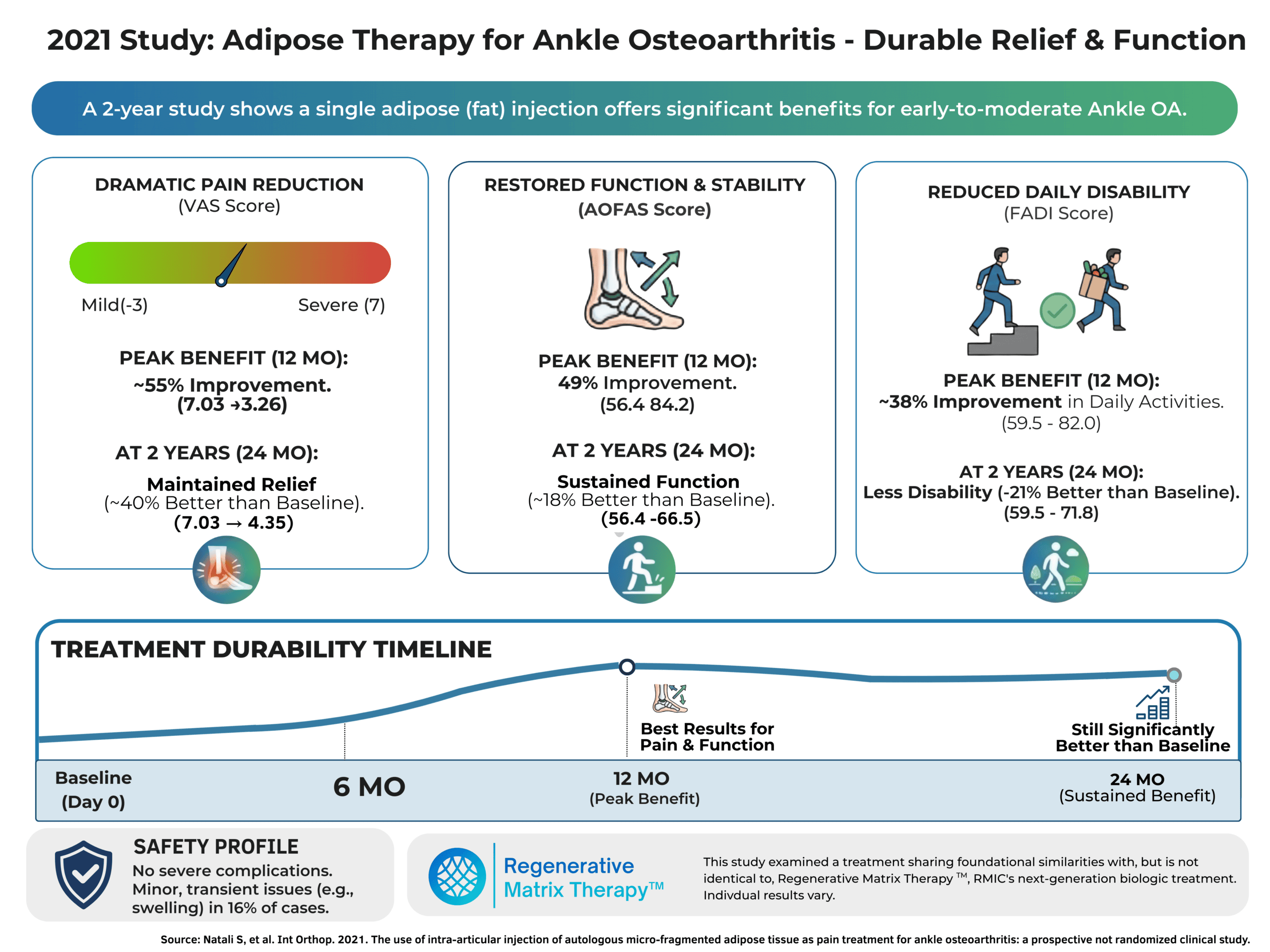
2021 Study: Adipose Therapy for Ankle Osteoarthritis (2-Year Results)
A 2021 study shows that a single adipose (fat) injection significantly reduced ankle pain and improved function for two years, avoiding fusion or replacement.
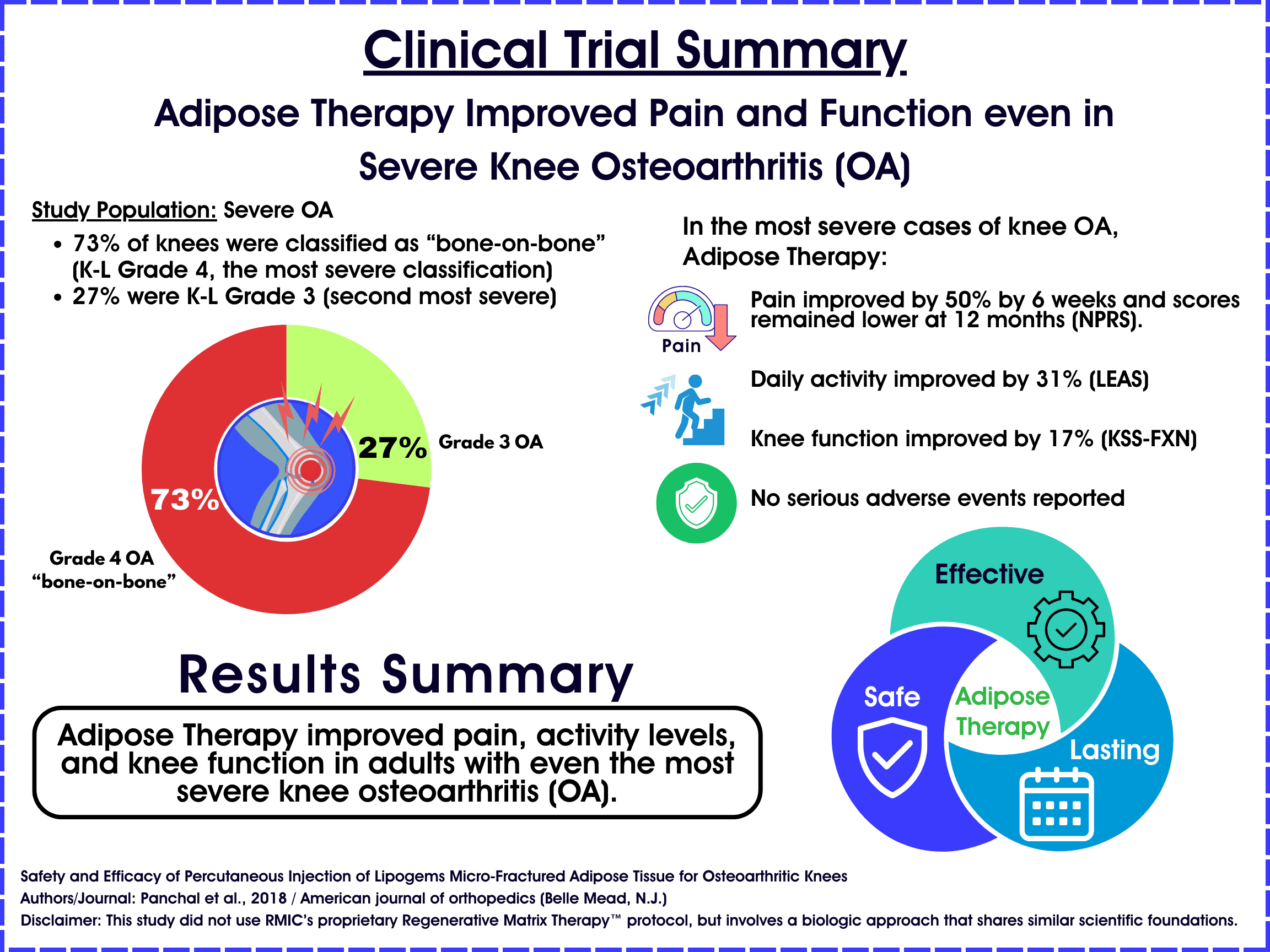
2018 Study: Adipose Therapy Helped in Severe Knee Osteoarthritis (OA)
A 2018 Study showed a single adipose injection for “bone-on-bone” severe knee OA reduced pain and boosted function at 12 months, with no serious adverse events.
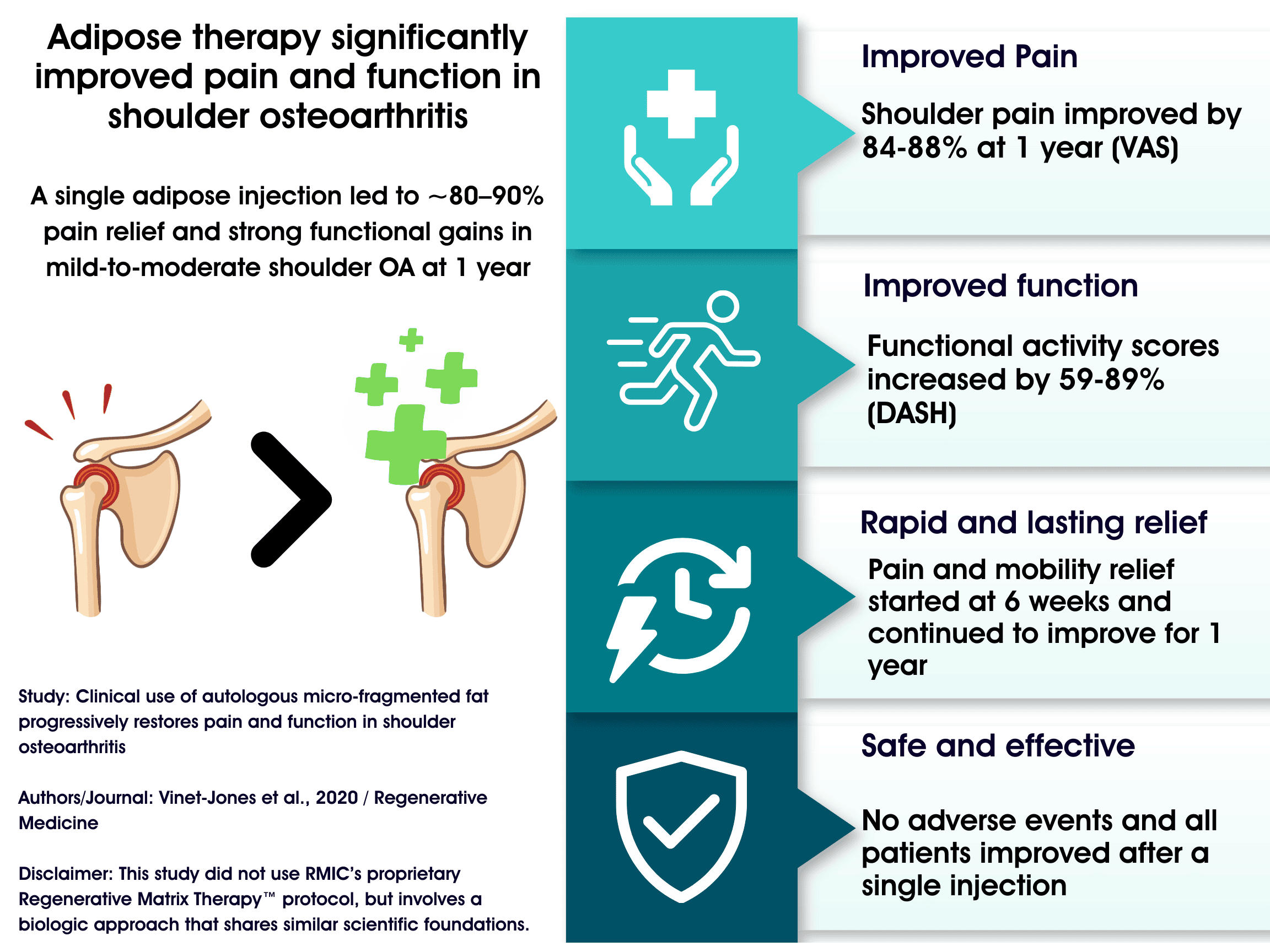
2020 Study: Adipose Injection Helped Mild-to-Moderate Shoulder OA
2020 study: a single adipose (fat) injection led to ~80–90% pain relief and strong functional gains in mild-to-moderate shoulder OA at 1 year.
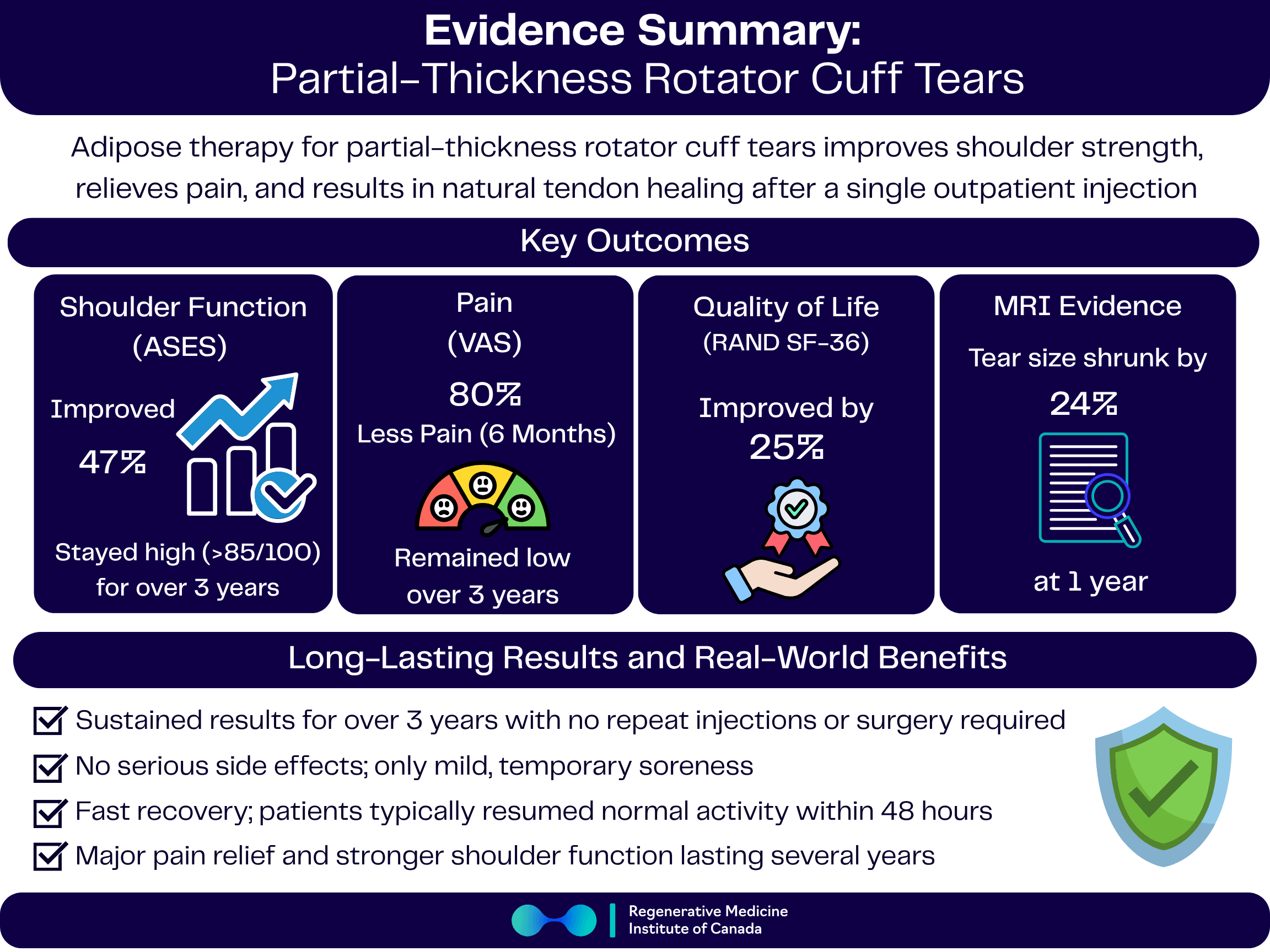
Evidence Summary: Adipose Therapy Provides Durable Relief for Partial Rotator Cuff Tears Without Surgery
Evidence summary of adipose-based therapy for partial thickness rotator cuff tears: ~50% better function, up to 80% less pain, and 3-year durability.